

Alfresco Enclosure Ideas Property Value
Can alfresco enclosure ideas actually increase property value? They can, but only when the enclosure improves how the space works. A well-planned alfresco enclosure can reduce exposure to wind and rain, extend the hours and seasons in which the area is comfortable, and create a stronger transition between the home and backyard. However, enclosing more space does not automatically create more value. If the project reduces natural light, restricts garden access or feels disconnected from the original house, the result may be less appealing to future buyers.
For homeowners, the real opportunity is therefore not simply to turn an open alfresco into an enclosed room. It is to remove the limitations that stop the existing area from being used while preserving the outdoor qualities that make alfresco living desirable.
The following alfresco enclosure ideas approach property value from that perspective.
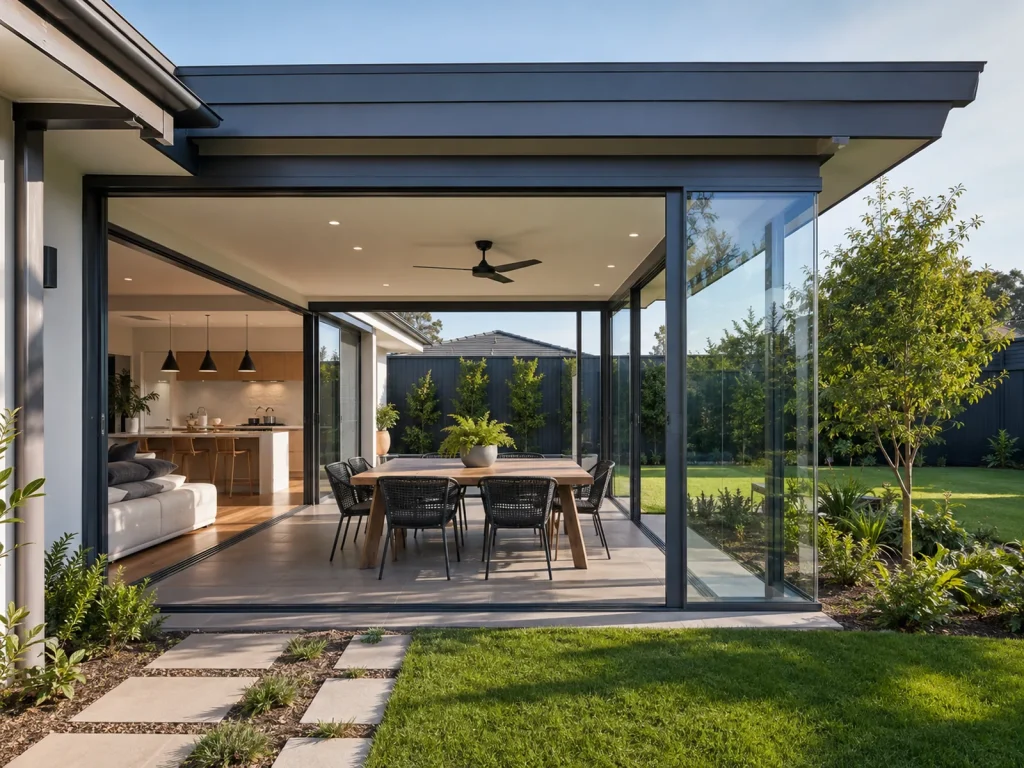
Can An Alfresco Enclosure Increase Property Value?
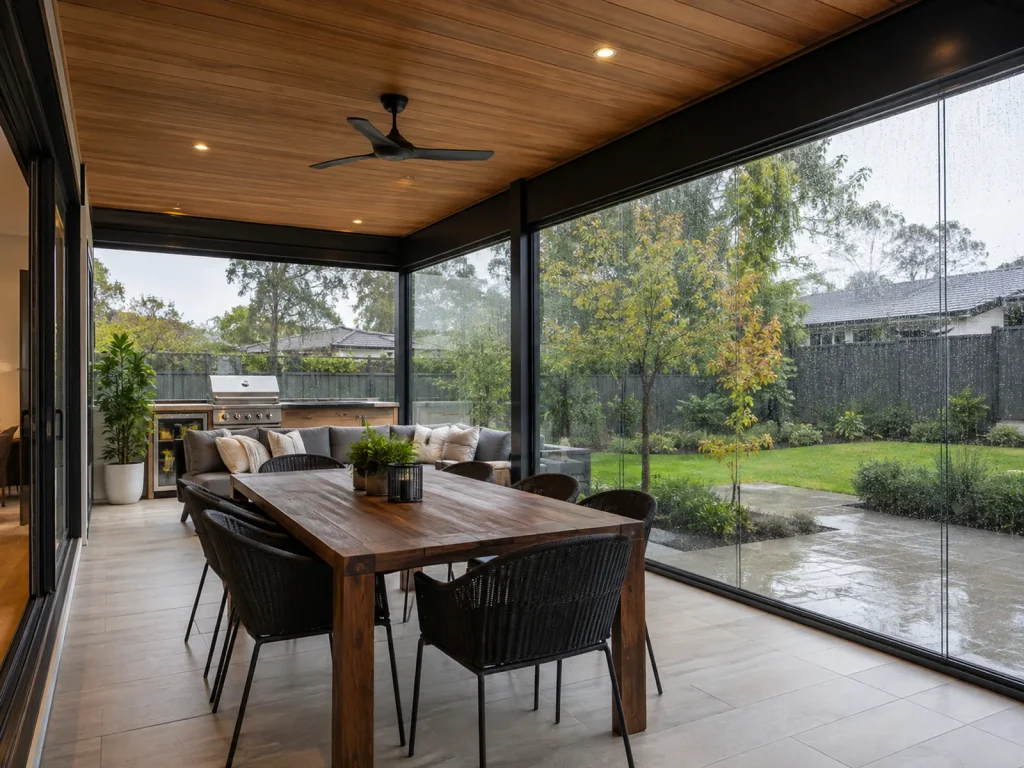
An alfresco enclosure may strengthen a property’s value proposition when it changes an occasionally useful outdoor area into a space that serves a clearer purpose.
Consider an alfresco that works beautifully on a calm weekend but becomes uncomfortable whenever wind drives rain through one side. The property technically has an outdoor entertaining area, yet the homeowner cannot rely on it.
In that situation, solving the exposure problem can matter more than increasing the physical size of the space.
The enclosed area may become suitable for family meals, entertaining guests, relaxing or providing a protected transition between indoor living areas and the backyard.
That changes how buyers perceive the property.
They are no longer looking only at a covered patio. They can see another practical lifestyle zone connected to the house.
However, this does not mean every alfresco should be fully enclosed.
If an existing alfresco already has good orientation, sufficient shelter and strong garden access, adding walls around it may offer limited additional benefit. It may even remove some of the openness that buyers value.
Property value therefore depends less on how much construction is added and more on whether the project solves a real weakness.
A useful way to assess the idea is:
Existing limitation → appropriate enclosure → greater usability → stronger property appeal
If the enclosure does not improve that chain, spending more does not necessarily produce a better result.
Which Alfresco Enclosure Ideas Can Add The Most Value?
Different properties have different weaknesses. One alfresco may need protection from wind, while another needs flexible openings or better control of sun and rain.
The enclosure system should therefore be selected around the problem rather than around whichever option appears most substantial.
Glass Alfresco Enclosures
Glass works well when weather protection is needed but homeowners still want to see the garden.
Instead of replacing an outdoor outlook with solid walls, glazed panels can maintain visual depth and allow natural light to continue through the alfresco into adjoining rooms.
This is particularly useful where the alfresco sits directly outside a kitchen, dining room or living area.
The potential property benefit comes from protection without excessive visual separation.
The area can feel more sheltered while still reading as part of the home’s indoor-outdoor layout.
However, the amount and position of glass require careful consideration.
A large glazed area exposed to strong afternoon sun can create unwanted heat and glare. More glass is therefore not automatically better.
Glazing, orientation, shading and ventilation need to work together.
Sliding Aluminium Door Enclosures
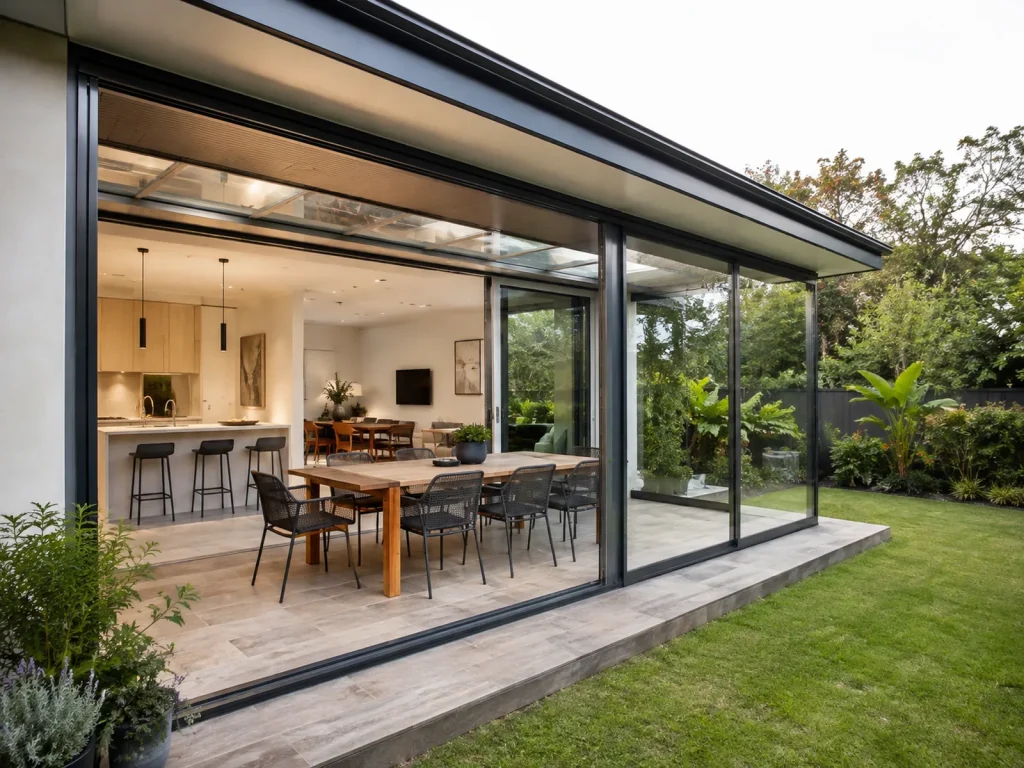
Sliding doors are a strong option when homeowners want an alfresco that can change between protected and open use.
When the doors are closed, the space gains greater separation from wind and weather. When conditions are pleasant, the panels can be opened to reconnect the alfresco with the backyard.
This flexibility matters because it avoids forcing the property into one mode of use.
The alfresco can remain part of outdoor living rather than becoming a permanently closed extension.
Sliding systems are also practical where swing space is limited. Large openings can be created without doors projecting into furniture or circulation areas.
For property appeal, the important feature is not simply the aluminium frame itself. It is the ability to protect the area when necessary without permanently sacrificing openness.
Bi-Fold And Wide-Opening Systems
Where entertaining and backyard connection are priorities, a wider opening may create more value than simply adding additional fixed glazing.
Bi-fold or multi-panel systems can open a significant portion of the enclosure.
This becomes especially useful when people regularly move between the kitchen, alfresco, barbecue area, garden or pool.
A narrow doorway can make an enclosed alfresco feel like a separate room.
A wide opening can do the opposite. It allows the space to operate as a bridge between inside and outside.
These systems require suitable dimensions and careful configuration, so they are not automatically the right choice for every home.
Their value lies in using a large opening where that opening materially improves movement and visual connection.
Partial Alfresco Enclosures
One of the most overlooked alfresco enclosure ideas is also one of the simplest: do not enclose more than necessary.
Suppose most uncomfortable weather enters from one side of the alfresco.
Adding protection to that elevation may solve the primary problem while leaving the garden-facing sides substantially open.
The homeowner gains greater comfort without changing the overall character of the outdoor area.
Partial enclosures can also help with privacy where neighbouring properties overlook one particular side.
Glass, screening or other appropriate panels can be positioned according to the actual site conditions.
For some properties, this targeted intervention offers better value than a complete enclosure because it achieves the required improvement with fewer compromises.
Alfresco Enclosures With A Motorised Louvered Pergola
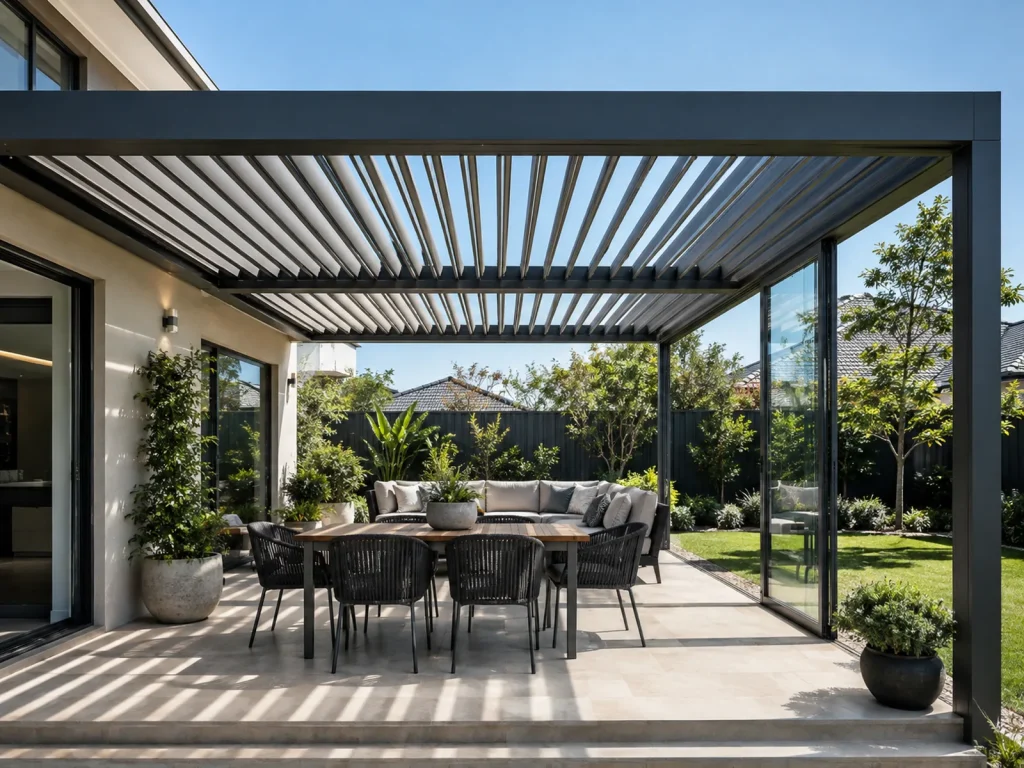
Side protection is only part of outdoor comfort. Sunlight and rain arriving from above can be equally important.
A motorised louvered pergola gives homeowners greater control over the roof above an outdoor area.
The louvers can be adjusted according to conditions, allowing more light and airflow when desired or greater overhead protection when the weather changes.
Combined with suitable side enclosures, this creates an outdoor area that can respond to different conditions instead of remaining permanently open or permanently closed.
For property value, the attraction is adaptability.
Rather than designing the space around one perfect summer afternoon, the system allows homeowners to manage changing sunlight, ventilation and weather throughout the year.
| Alfresco Enclosure Idea | Where It Can Add The Most Value | Main Property Benefit | Main Trade-Off |
|---|---|---|---|
| Glass enclosure | Alfrescos needing protection while preserving views | Maintains light and garden connection | Solar heat and glare need consideration |
| Sliding aluminium doors | Areas requiring flexible open and closed use | Combines weather protection with easy access | Opening width depends on configuration |
| Bi-fold or wide-opening system | Entertaining-focused alfresco areas | Creates stronger indoor-outdoor flow | Requires suitable space and planning |
| Partial enclosure | Spaces exposed mainly from one direction | Solves a specific problem without over-enclosing | Provides less complete weather protection |
| Enclosure with louvered pergola | Areas affected by both overhead and side exposure | Greater control over changing conditions | More elements need to work together |
The strongest option is therefore not necessarily the most expensive one.
It is the system that improves the specific weakness buyers or occupants would otherwise notice.
What Actually Makes An Alfresco Enclosure Valuable To Buyers?
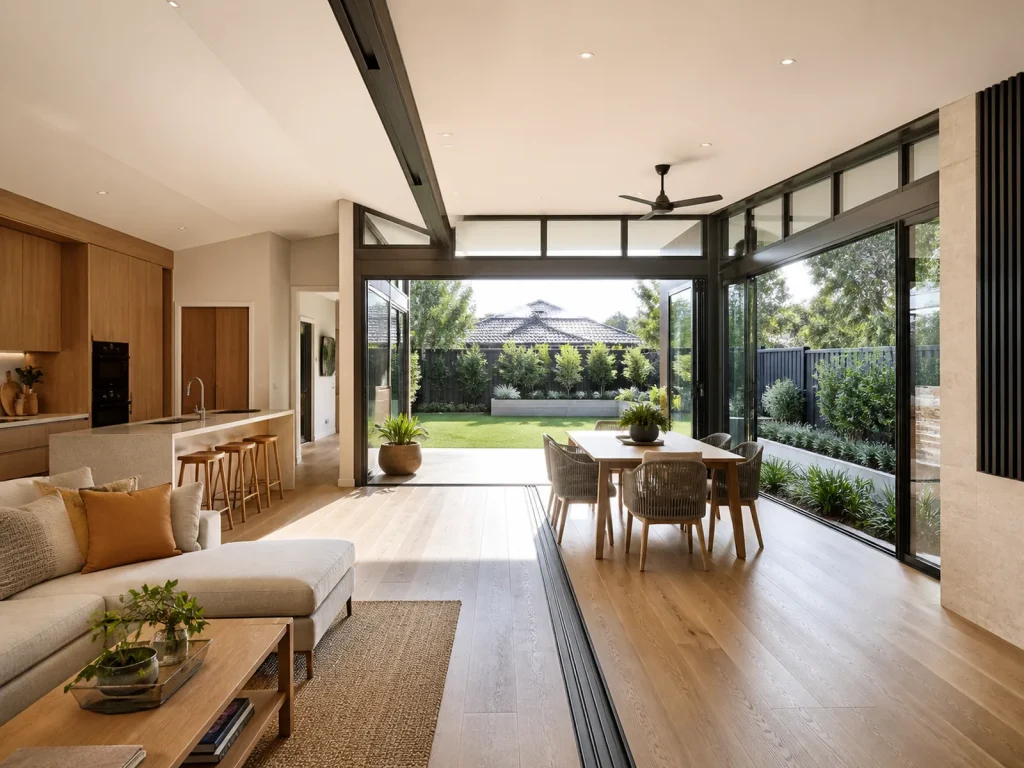
Property buyers rarely evaluate an alfresco by asking how many panels, doors or upgrades were installed.
They respond to the finished experience.
Several factors determine whether an enclosure feels like a meaningful property improvement.
It Makes The Space Easier To Use
The first test is simple: does the enclosure give people more realistic opportunities to use the alfresco?
If wind, rain or exposure previously kept the area empty, improving protection can make the floor area more useful.
That functional change is more meaningful than adding features that do not alter how the household lives.
It Preserves Natural Light
An alfresco usually sits immediately outside another room.
Changes to the alfresco can therefore affect more than the outdoor area itself.
Heavy enclosure can reduce daylight reaching the living or dining room behind it. This may make both areas feel darker.
A successful design considers sightlines and daylight from inside the house as well as comfort within the alfresco.
It Still Connects With The Backyard
An enclosed alfresco should not become a barrier between the house and garden.
Access needs to remain obvious and comfortable.
Sliding, bi-fold or appropriately positioned openings can help retain this relationship.
When buyers can move naturally from the interior through the alfresco and into the backyard, the different areas read as one connected property rather than separate zones.
It Looks Like Part Of The Original Home
An enclosure that obviously appears to have been added later may not create the same impression as one that responds to the architecture of the house.
Frame colour, roof line, panel proportions and existing windows and doors all influence the result.
The goal is not necessarily to copy every element.
It is to avoid creating an enclosure that competes visually with the building it is supposed to improve.
It Leaves Future Owners With Options
Homeowners use outdoor spaces differently.
One buyer may want an outdoor dining area. Another may prioritise children’s activities or casual entertaining.
Flexible openings and relatively adaptable layouts allow the alfresco to accommodate these differences.
That can be more attractive than a highly specialised enclosure designed around one household’s furniture or routine.
When Can An Alfresco Enclosure Reduce Property Appeal?
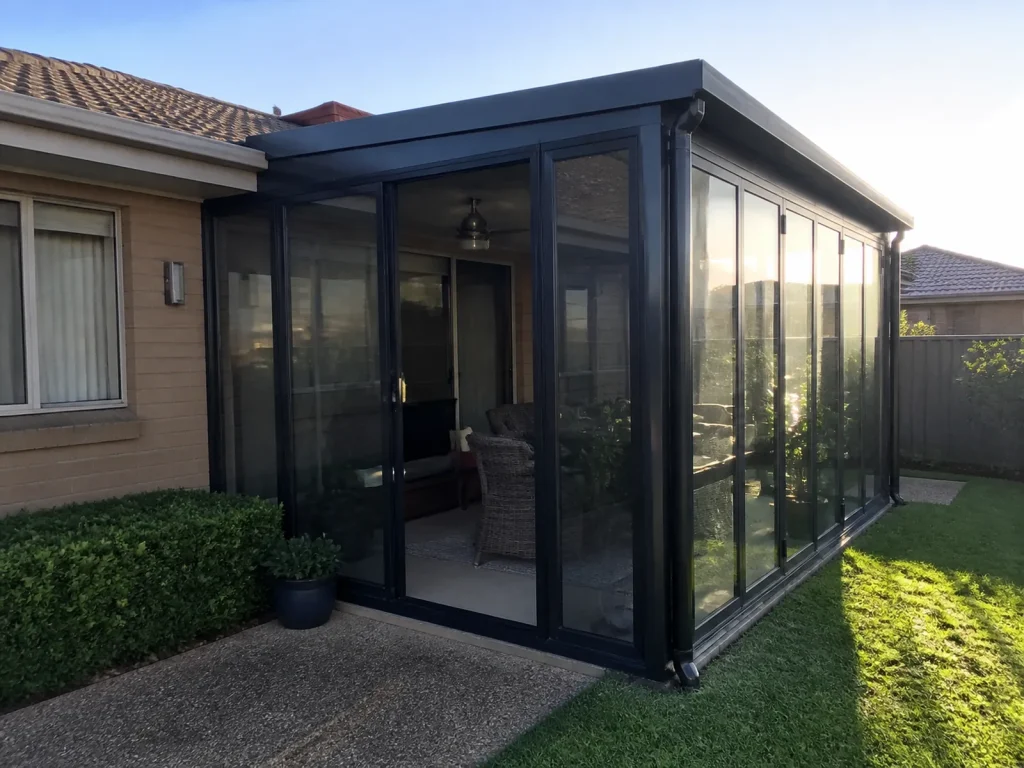
An enclosure is an improvement only if what it adds is more valuable than what it removes.
Several design mistakes can upset that balance.
Over-enclosing a naturally sheltered alfresco is one example. If the area already works well as an outdoor room, enclosing every side may provide little practical benefit while reducing airflow and openness.
Blocking too much light can also affect the adjoining house. A protected alfresco is unlikely to feel like an upgrade if the living room behind it becomes noticeably darker.
Another problem is poor thermal planning.
A large glazed enclosure may look impressive, but orientation matters. Strong solar exposure combined with insufficient ventilation or shading can make the space uncomfortable during warmer periods.
Weak backyard connection is equally important.
If an enclosure creates small doorways, awkward thresholds or difficult circulation, it can interrupt the indoor-outdoor relationship the original alfresco was intended to provide.
Finally, an enclosure that appears visually unrelated to the existing home can make the project feel temporary or retrofitted.
The underlying lesson is straightforward:
Do not judge an alfresco enclosure by how much has been added. Judge it by how few new problems remain after the original problem has been solved.
Is Full Or Partial Enclosure Better For Property Value?
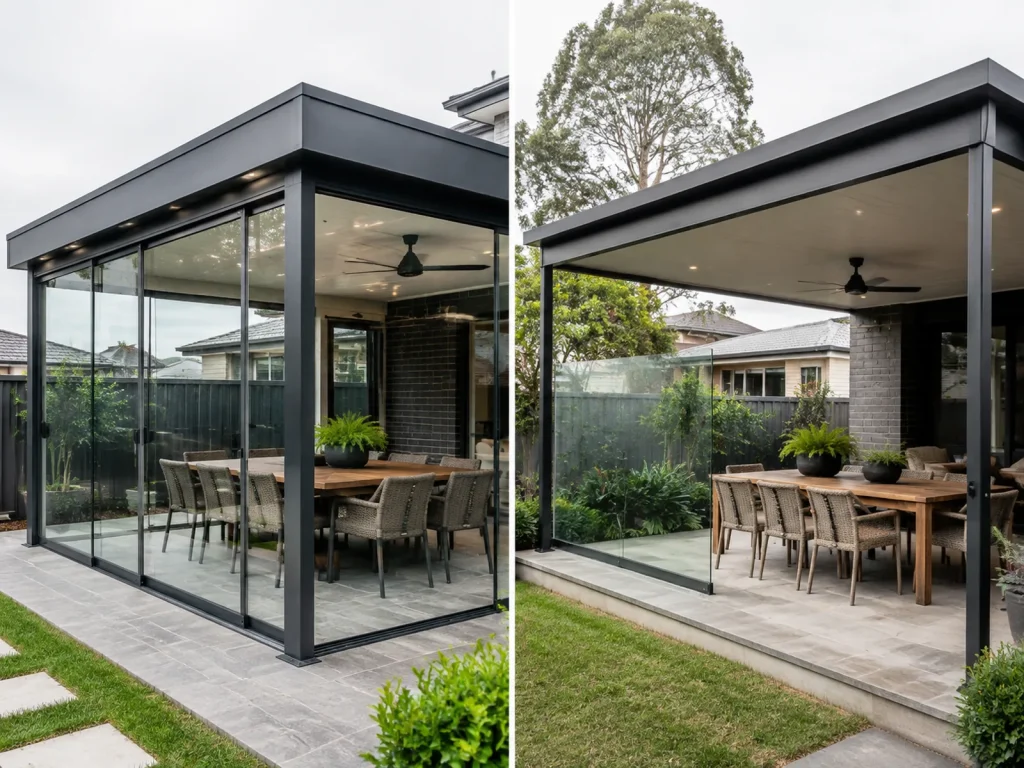
Neither option is automatically better.
The answer depends on how exposed the existing alfresco is and how the homeowner wants the area to function.
A full enclosure may make sense when several sides experience wind, rain or other environmental exposure and the aim is to create a substantially more protected living zone.
It may also suit homeowners who expect to use the alfresco frequently for dining, relaxing or entertaining under changing weather conditions.
A partial enclosure can make more sense when one problem dominates.
If rain consistently enters from one direction, or one side lacks privacy, treating that side may be enough.
The important question is:
What additional benefit would closing the next side actually create?
If the answer is very little, the additional enclosure may add cost without adding equivalent usefulness.
Opening systems offer another option.
Sliding or bi-fold panels can create substantial protection when closed but allow the area to recover much of its original openness when the weather suits.
For homes where future flexibility matters, this can offer a useful compromise between full and partial enclosure.
Is Enclosing An Alfresco Worth The Investment?
The answer should be based on more than an expected future sale price.
Start by considering how often the existing alfresco goes unused and why.
If a relatively targeted enclosure would turn a frequently uncomfortable space into an area your household uses several times a week, the project begins delivering value immediately.
That lifestyle benefit may continue for years before the home is sold.
The calculation becomes less convincing when the project is undertaken purely because homeowners assume enclosed floor area will automatically translate into a specific increase in property value.
An alfresco enclosure should not simply be valued as though it were conventional internal floor area.
Its design, construction, approvals, integration and function all affect how future buyers perceive it.
Homeowners should therefore compare:
the problem being solved + expected frequency of use + design quality + long-term flexibility
against:
project cost + maintenance + design compromises + approval requirements
This produces a much more useful decision than asking whether every enclosed alfresco adds the same percentage to a home’s sale price.
Before construction, the project’s planning and building requirements should also be confirmed for the particular property and scope of work. Depending on the design and site, different approval or certification requirements may apply.
Good compliance planning protects more than the construction process. It also helps avoid leaving future owners with uncertainty about an alteration to the property.
Conclusion
The best alfresco enclosure ideas for property value are not necessarily the largest or most enclosed. They are the solutions that remove a genuine limitation while preserving the light, airflow, garden connection and flexibility that make alfresco living attractive.
A carefully planned glass enclosure, sliding or bi-fold opening, partial enclosure or adjustable pergola system can transform an underused outdoor area into a more practical part of the home.
Ezysunroom provides customised outdoor living solutions for different property layouts and requirements. If you are considering an enclosed alfresco, aluminium doors and windows, sunroom or motorised louvered pergola, contact admin@ezysunroom.com.au to discuss your project and explore a solution suited to your home.