

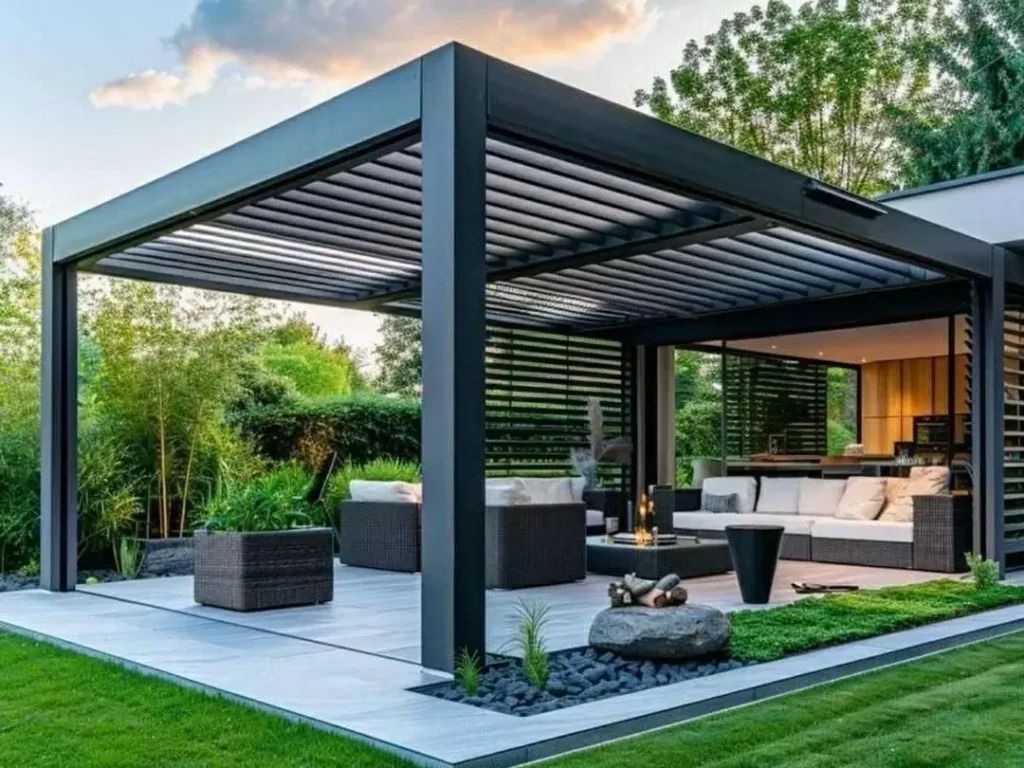
Outdoor areas often look attractive in project drawings but become too hot at midday, exposed during sudden rain, or uncomfortable when airflow is limited. For cafés, developers, builders, and property owners, that can mean underused space and lower project value. A louvred pergola louvered roof offers a more flexible answer by giving users control over shade, ventilation, and rain protection in one structure.
A louvred pergola louvered roof uses adjustable aluminium blades that can open, tilt, or close to manage sunlight, airflow, and rain. Unlike a fixed patio cover, it allows outdoor spaces to adapt throughout the day. For B2B projects, the best result depends on matching the roof size, drainage, controls, finish, and installation method to the actual site.
A louvered roof may look simple from below, but its real performance depends on many details. Blade design, frame strength, water drainage, motor reliability, and site planning all affect whether the pergola becomes a useful long-term asset or an expensive structure that is only comfortable in ideal weather.
What Is a Louvred Pergola Louvered Roof?
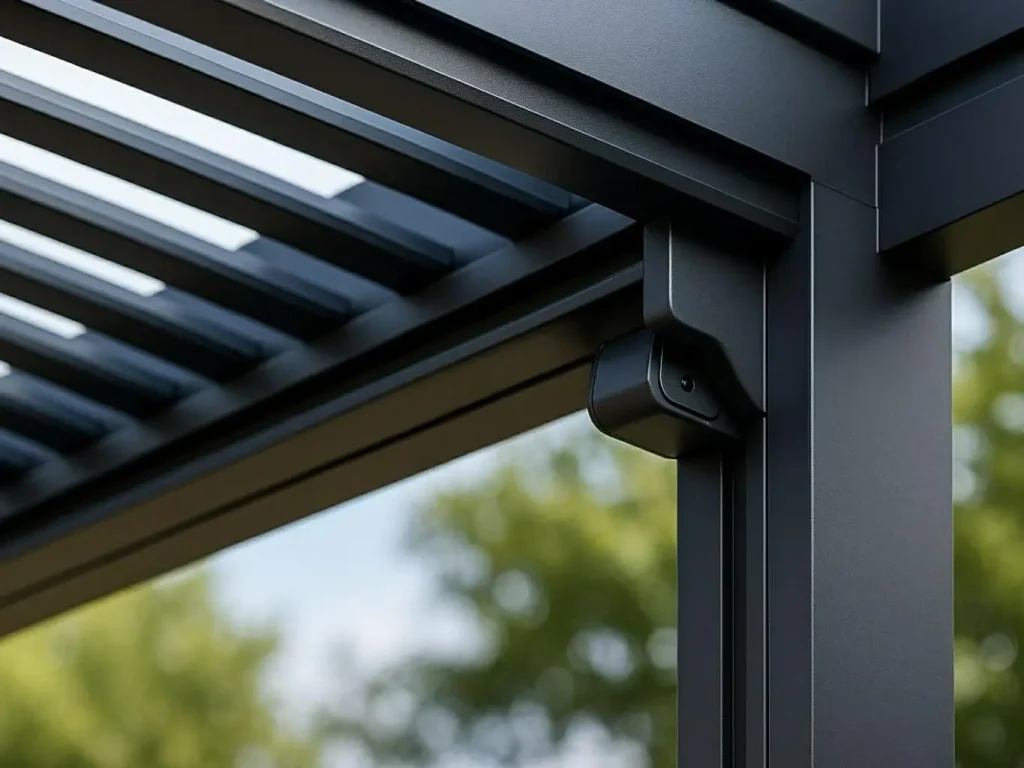
A louvred pergola louvered roof is an outdoor structure with rotating roof blades, often made from powder-coated aluminium. The blades can be positioned at different angles to allow direct sun, filtered light, natural ventilation, or greater weather protection.
The term “louvred” is frequently used in Australia and the UK, while “louvered” is more common in North America. In practical terms, they describe the same concept: a pergola roof that can be adjusted instead of remaining permanently open or permanently covered.
This flexibility makes a louvered roof suitable for a wide range of projects. A restaurant terrace may need soft morning light, stronger shade during lunch, and cover when rain arrives. A residential developer may want outdoor areas that feel open rather than dark and enclosed. A builder may need a premium aluminium structure that can be adapted to different project layouts.
A motorised system makes adjustment easier. Instead of manually moving panels or fitting temporary covers, the user can operate the blades with a remote control, wall switch, or optional smart-control feature. Some systems can also include rain sensors, integrated lighting, side screens, and heating options.
For Ezysunroom partners, this makes motorised louvered pergolas a practical addition to outdoor dining areas, courtyard projects, poolside zones, display homes, sunroom extensions, and premium residential developments. The aim is not simply to add a roof. It is to make outdoor space more usable under changing conditions.
Are Louvered Pergolas Waterproof?
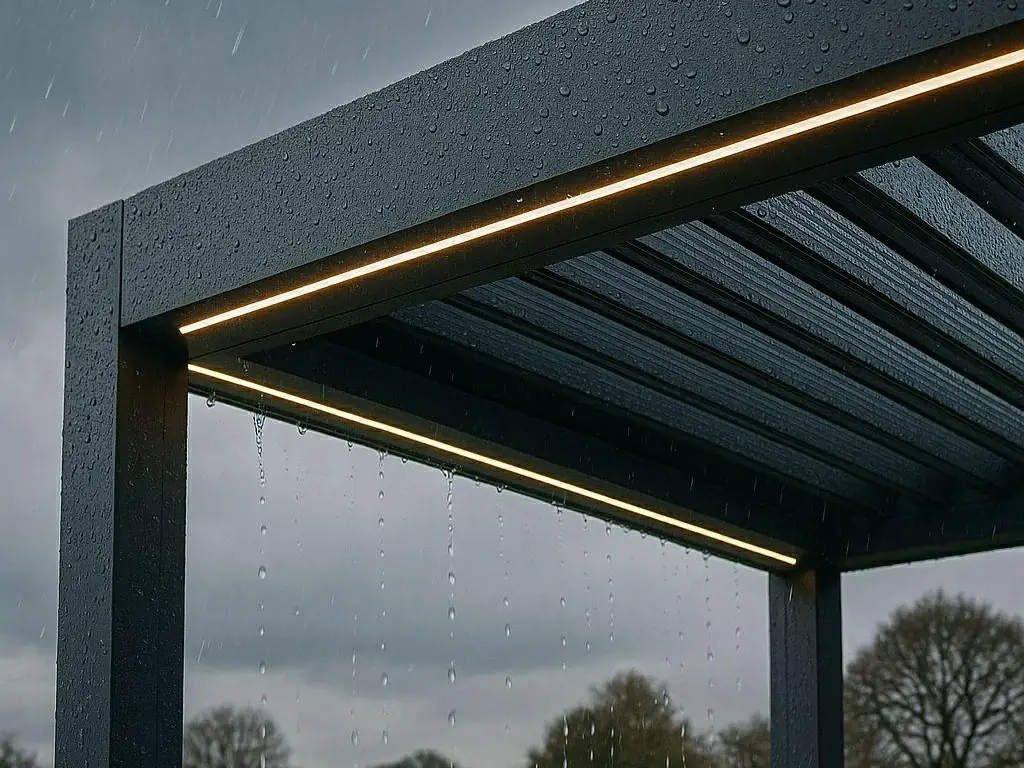
A louvered pergola is designed to manage rainwater when the blades are closed, but buyers should understand the difference between water management and absolute waterproofing. A well-designed system directs water from the closed blades into integrated gutters and downpipes, helping to keep the covered area dry during normal rainfall.
The roof blades usually overlap or interlock when closed. Their angled profile directs water toward the internal gutter channels around the frame. Water is then carried through the posts or dedicated downpipes to a suitable drainage point.
However, roof performance depends on more than the louvers themselves. Even high-quality aluminium blades cannot solve poor installation, blocked gutters, incorrect roof levels, undersized drainage, or unsuitable discharge locations. This is why commercial and residential buyers should review drainage before confirming the final design.
For example, a louvered pergola installed beside a restaurant entrance must not send water toward the doorway. A pergola near a swimming pool should avoid drainage discharge points that create slippery surfaces. A system installed beneath mature trees needs access for leaf removal and regular cleaning.
Buyers should also consider weather exposure. Strong wind-driven rain can affect any openable roof system, especially if the blades are not fully closed. In coastal areas, salt exposure should also influence the chosen finish, maintenance plan, and fixing materials.
The key question is not simply, “Is it waterproof?” A better question is, “How does the entire roof system collect, direct, and discharge water on this site?” That is where successful louvered pergola design begins.
What Is the Difference Between a Louvered Roof and a Fixed Pergola Roof?
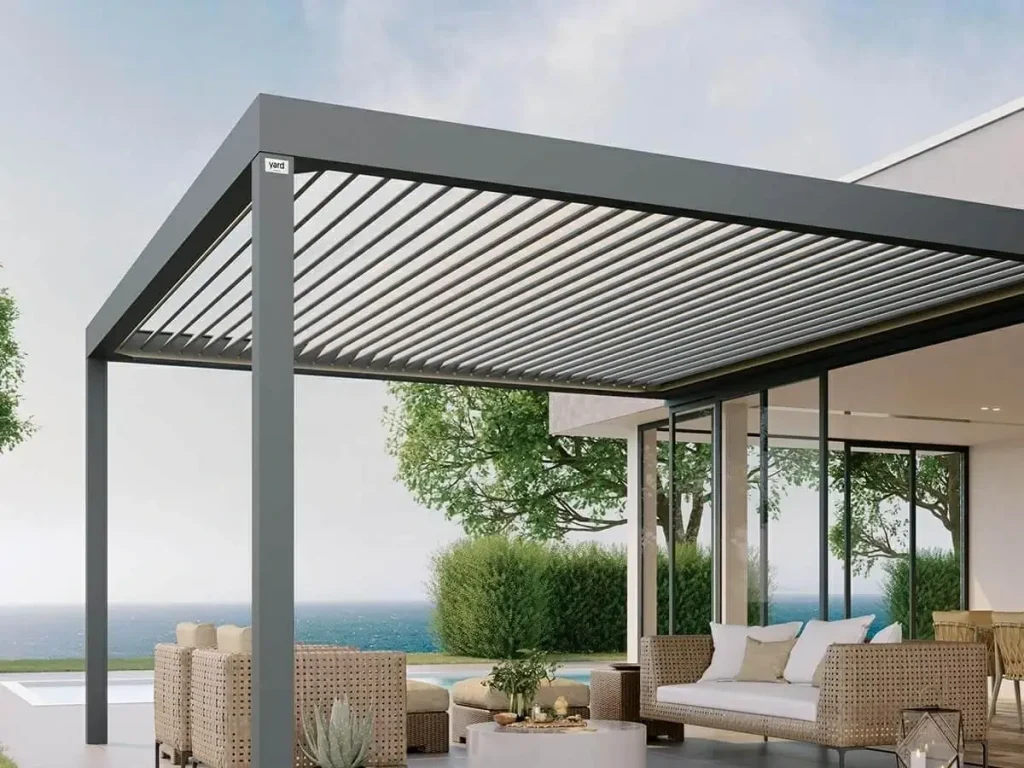
The biggest difference is control. A fixed pergola roof remains in one position. It may provide permanent shade or permanent rain cover, but it cannot respond to changing weather, sunlight, or user needs.
A louvered roof gives the user more options. The blades can open for sunlight and ventilation, tilt for partial shade, or close when rain begins. This makes it especially useful in places where outdoor conditions change throughout the day.
| Project Factor | Fixed Pergola Roof | Louvred Pergola Louvered Roof |
|---|---|---|
| Sunlight control | Permanent | Adjustable throughout the day |
| Ventilation | Limited by roof material | Controlled through blade angle |
| Rain protection | Constant cover | Available when blades are closed |
| Outdoor feeling | Can feel enclosed | Can remain open and airy |
| Operation | No moving parts | Manual or motorised control |
| Best use | Simple permanent shelter | Flexible outdoor living and dining |
A fixed polycarbonate, insulated, or metal roof can still be the right solution for some projects. For example, a loading area, a storage zone, or a permanently covered walkway may need constant shelter rather than adjustable airflow.
But flexible spaces benefit from flexible roofs. Outdoor dining areas, private courtyards, poolside lounges, display-home patios, and residential decks often need to perform differently at different times. An open roof may be desirable on a mild morning, while a closed roof becomes necessary during rain or intense afternoon sun.
The choice should be based on how the space will be used, not only on the visual design. A structure that looks impressive but cannot support real daily use may not deliver the expected return.
Are Louvered Pergolas Worth It?
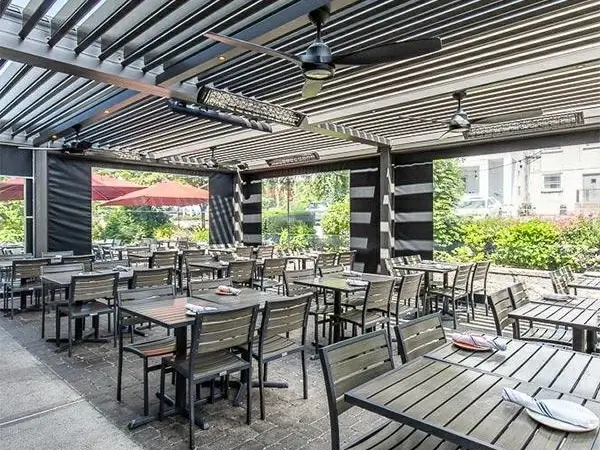
Louvered pergolas are worth considering when an outdoor space needs to generate more practical value. This may mean keeping restaurant seating available during light rain, improving the appeal of a residential project, creating a premium upgrade for dealers, or making a private outdoor zone more comfortable across different seasons.
The upfront cost is often higher than a basic open timber pergola or simple fixed awning. That is because a louvered system includes movable blades, drainage channels, an aluminium frame, controls, and more precise engineering. However, the value calculation should not focus only on the initial price.
For a hospitality business, an adjustable roof can help reduce weather-related disruption. For a developer, it may improve the perceived quality of a courtyard, terrace, or common area. For a contractor or reseller, it can create a higher-value product category than a standard fixed shade structure.
Louvered pergolas are particularly useful when a project needs more than shade. They make sense when users want a space that can be bright, breezy, shaded, or protected depending on the moment.
Before investing, B2B buyers should ask a few practical questions:
- Will the space be used throughout the day or only occasionally?
- Does rain frequently interrupt outdoor dining, entertaining, or customer activity?
- Is natural airflow important during warmer weather?
- Does the project need a modern aluminium finish that suits a premium market?
- Can the site support suitable drainage, electrical access, and structural footings?
- Will the supplier provide clear drawings, reliable lead times, and after-sales support?
When several of these answers are positive, a louvered pergola can become a functional investment rather than a purely decorative feature.
Can a Louvered Pergola Be Attached to a House or Building?
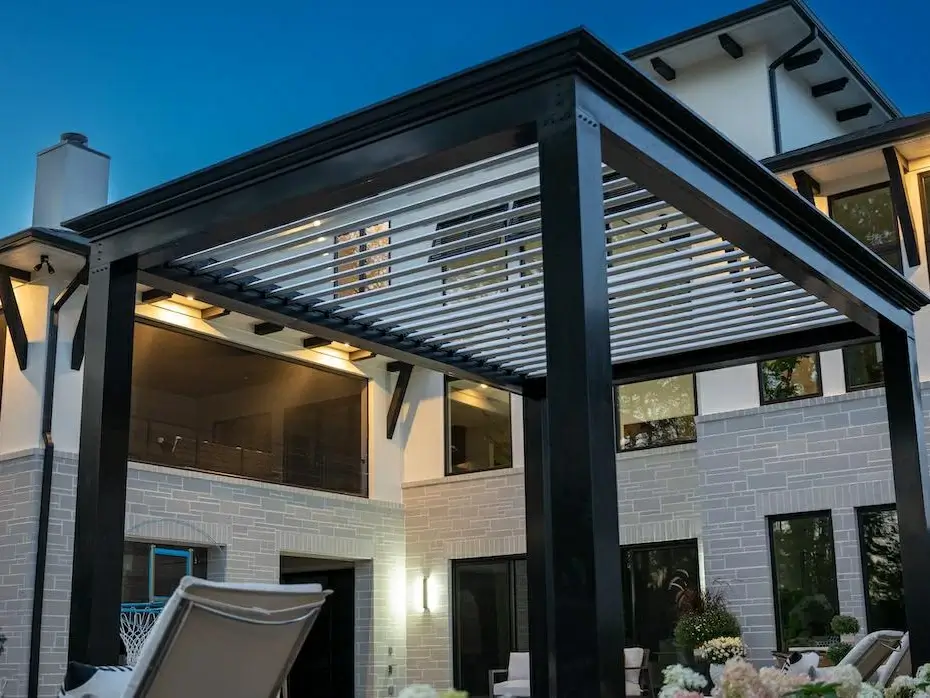
Yes, a louvered pergola can be attached to a house or commercial building, but the connection must be planned carefully. The wall structure, roofline, drainage route, door height, footing position, and local approval requirements can all affect the design.
An attached pergola can create a smooth transition between indoor and outdoor areas. This is especially useful beside sliding doors, enclosed dining areas, cafés, showrooms, and sunroom extensions. It can make the outdoor zone feel like a natural continuation of the building rather than a separate structure placed in the garden.
However, building attachment should never be treated as a minor detail. The structure must be fixed to suitable load-bearing elements rather than lightweight cladding. Water must be directed away from the building connection. The roof height must avoid interfering with doors, windows, eaves, and existing drainage systems.
Professional assessment is important because different sites create different challenges. A brick wall may require a different attachment detail from a timber-framed building. A freestanding pergola may be more suitable when the existing building cannot support a roof connection or when the buyer wants the structure positioned away from the house.
Attached and freestanding configurations both have advantages. The best option depends on the space, project purpose, and building structure. Ezysunroom can support louvered pergola configurations that suit different layouts, including outdoor dining zones, patios, courtyards, and standalone garden structures.
How Long Does a Louvered Roof Last?
The service life of a louvered roof depends on material quality, site exposure, installation standards, maintenance, and how often the system is used. Aluminium is widely used because it is lightweight, corrosion-resistant, and compatible with durable powder-coated finishes. Ezysunroom’s motorised louvre pergolas commonly use aluminium components designed for outdoor use and changing weather conditions.
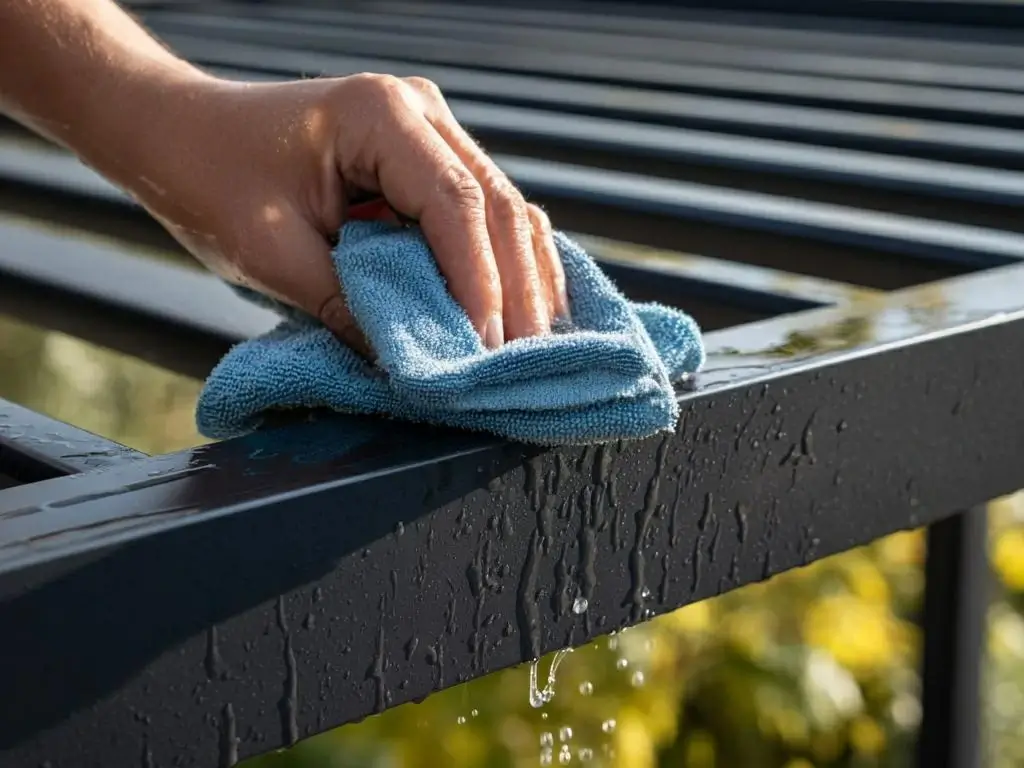
Still, no outdoor product remains maintenance-free forever. Leaves, dust, salt, pollen, and debris can affect drainage and moving parts. Motors, seals, fasteners, and gutter channels should be checked regularly, particularly after severe weather.
A simple maintenance plan can help protect both appearance and performance:
- Clear leaves and debris from gutters and drainage outlets.
- Wash the blades and frame to remove dust, salt, and pollution buildup.
- Check that the louvers open and close smoothly.
- Inspect visible fasteners, seals, and drainage points.
- Test motors, remotes, sensors, lighting, and optional accessories.
- Arrange professional inspection if blades become noisy, misaligned, or difficult to operate.
Maintenance is especially important in coastal areas, heavily treed properties, commercial venues, and high-use hospitality spaces. A good supplier should be able to explain cleaning expectations, replacement-part availability, warranty coverage, and recommended maintenance procedures before the order is placed.
What Should B2B Buyers Check Before Ordering a Louvred Pergola Louvered Roof?
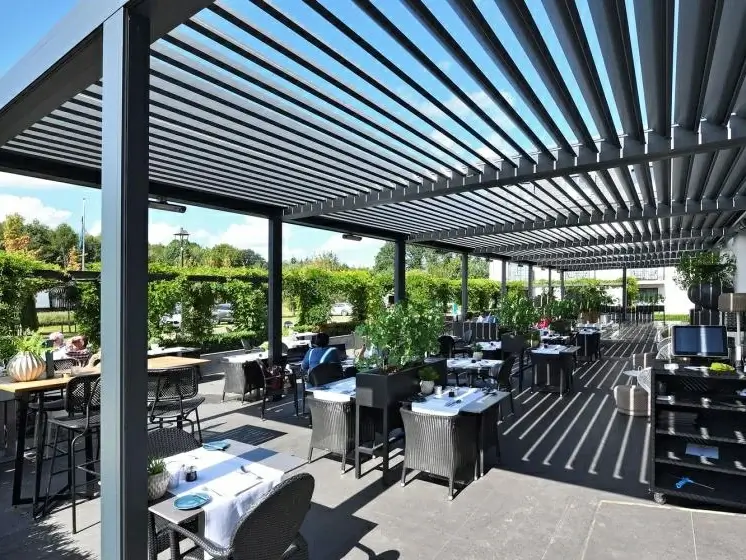
B2B purchasing decisions should start with the project brief rather than a standard product size. A pergola that works well in one location may not suit another, even when the floor area appears similar.
First, clarify how the space will be used. Is the project an outdoor restaurant terrace, a residential backyard, a hotel courtyard, a poolside lounge, a showroom extension, or a multi-unit development? Each project creates different demands for shade, drainage, foot traffic, privacy, lighting, and durability.
Next, confirm accurate site dimensions. Measure not only the width and projection, but also door openings, roof eaves, wall heights, nearby trees, slopes, drainage points, and installation access. A design can look perfect on paper yet become difficult to install if posts interfere with doors or construction equipment cannot reach the area.
Then consider weather exposure. Wind conditions, rainfall patterns, coastal salt, heat, and nearby buildings can all influence the roof configuration. Buyers should avoid comparing systems by appearance alone. Blade profile, frame strength, post placement, drainage capacity, and engineering suitability matter more over the long term.
Controls are another important decision. A small residential pergola may only need a remote control. A restaurant, hotel, or display centre may benefit from wall switches, rain sensors, integrated LED lighting, side blinds, or automated operation. The goal is to make the system simple for the end user, not unnecessarily complicated.
Finally, assess the supplier’s capability. B2B buyers need more than a low factory price. They need consistent specifications, clear drawings, product options, stock availability, safe packaging, realistic lead times, and support when project details change. Ezysunroom supports B2B customers with factory pricing, ample stock, short lead times, and a broader product range that includes sunrooms, portable sunrooms, carports, retractable pergolas, folding awnings, aluminium doors, windows, railings, and outdoor dining solutions.
Conclusion
A louvred pergola louvered roof gives outdoor spaces something a fixed roof cannot: flexibility. By opening, tilting, or closing the blades, users can respond to changing sunlight, airflow, and rain without changing the structure itself.
For B2B buyers, the strongest projects begin with practical planning. Review the intended use, structural layout, roof span, drainage route, control system, finish, and installation conditions before finalising an order. A well-specified louvered pergola can help turn an underused patio, courtyard, terrace, or dining zone into a more valuable and adaptable outdoor space.
Have a project requirement or a different view on louvered roof design? Share this article with your team, discuss it with your installer, or contact Ezysunroom at admin@ezysunroom.com.au to explore suitable pergola, sunroom, awning, and outdoor enclosure options.